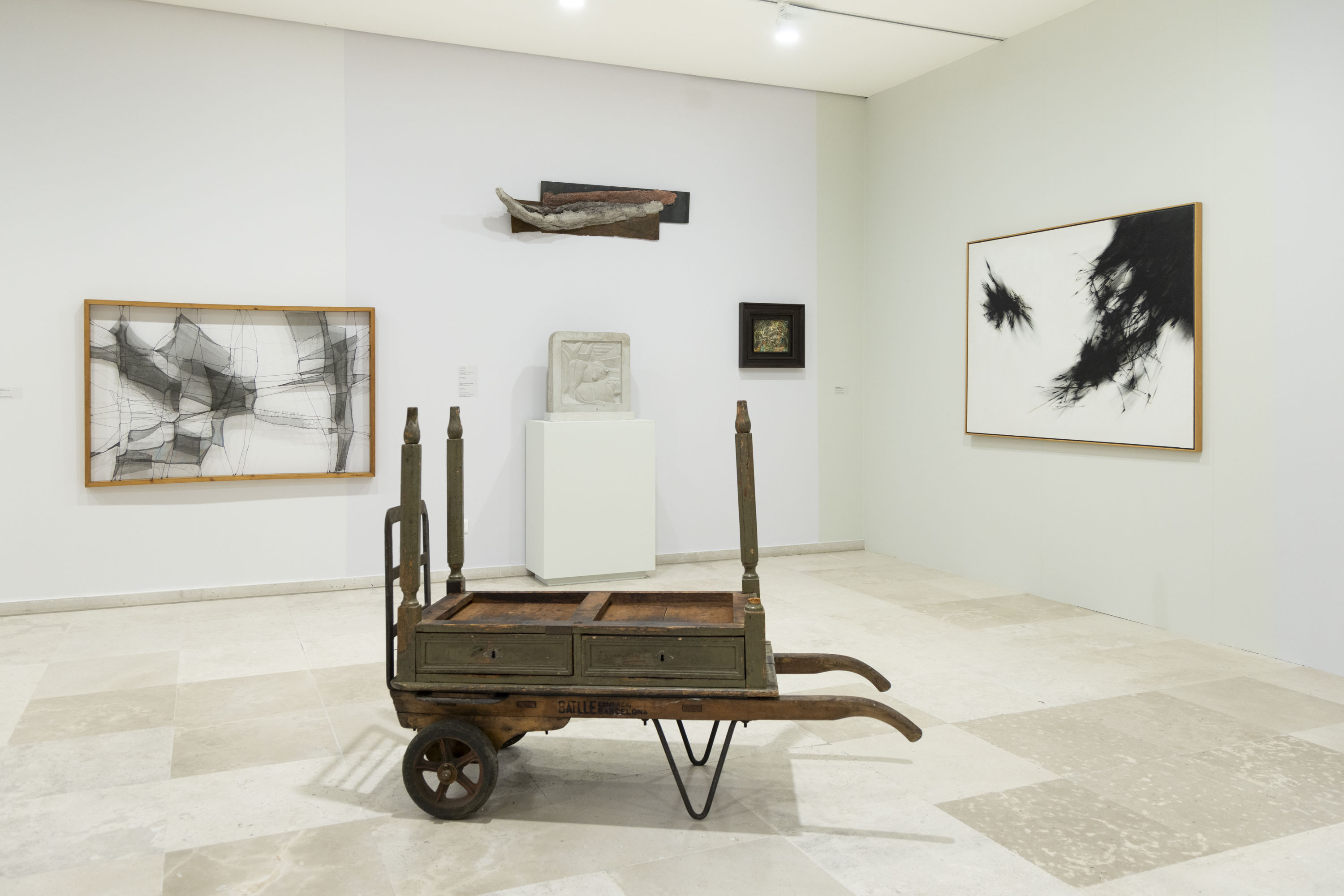
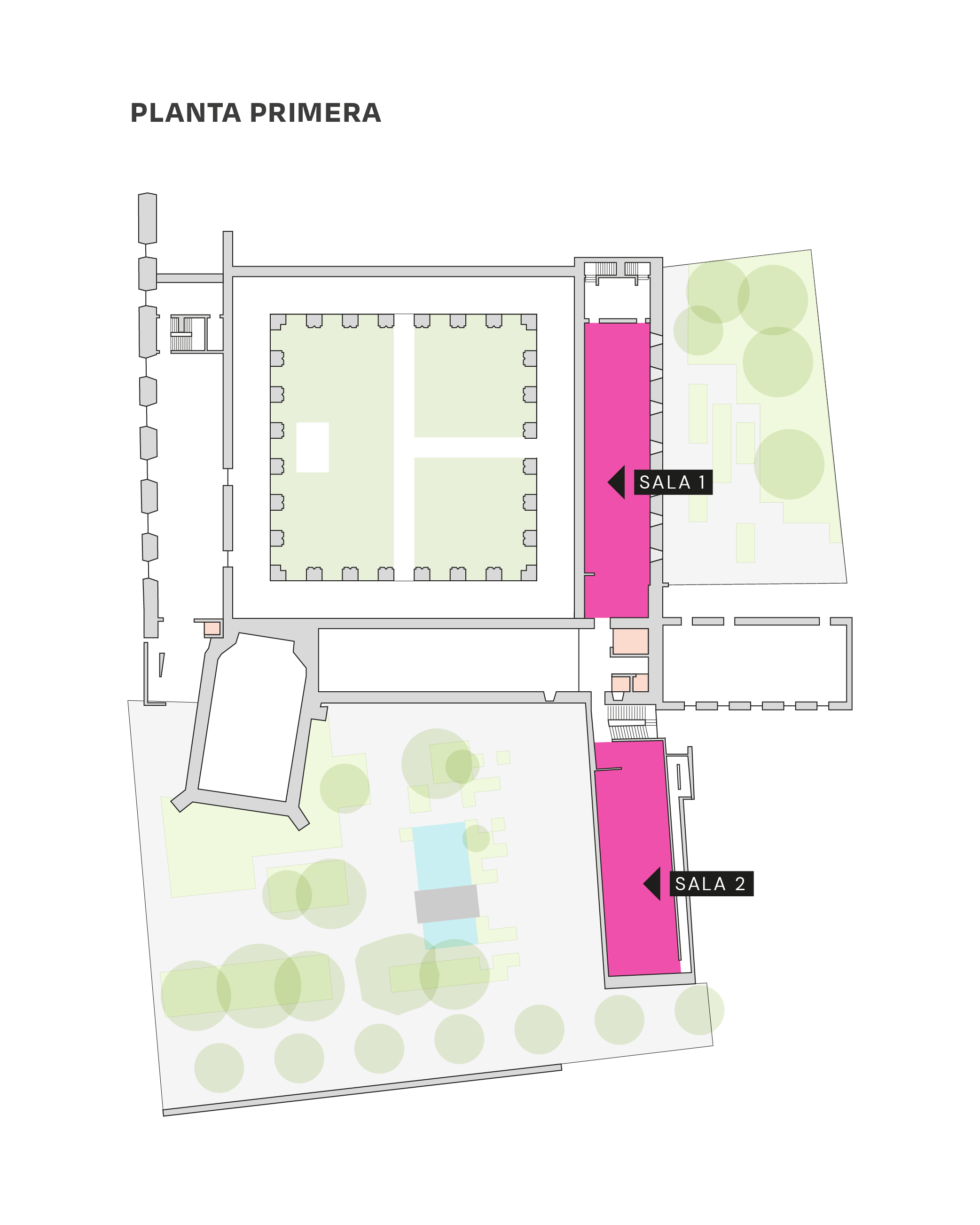
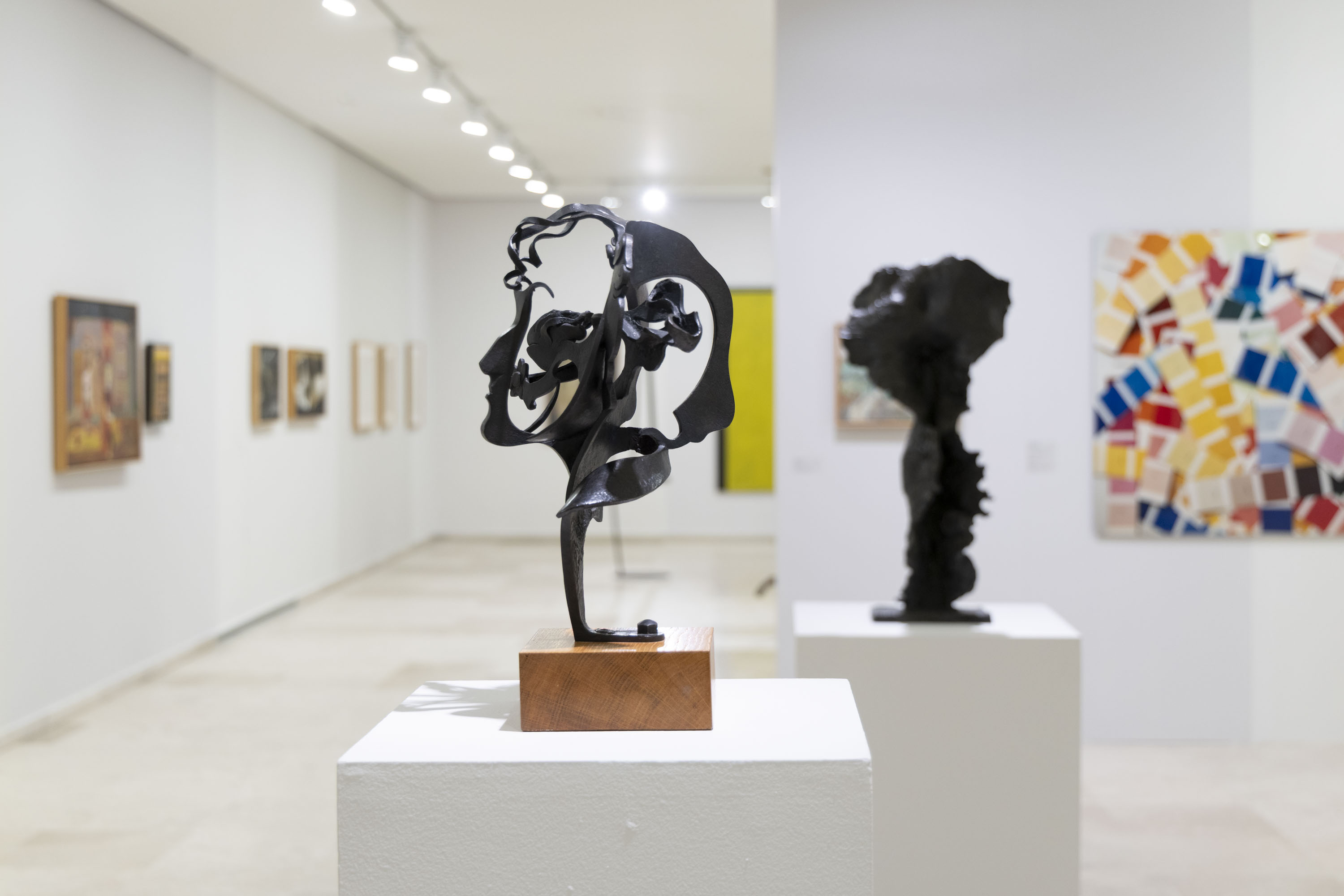
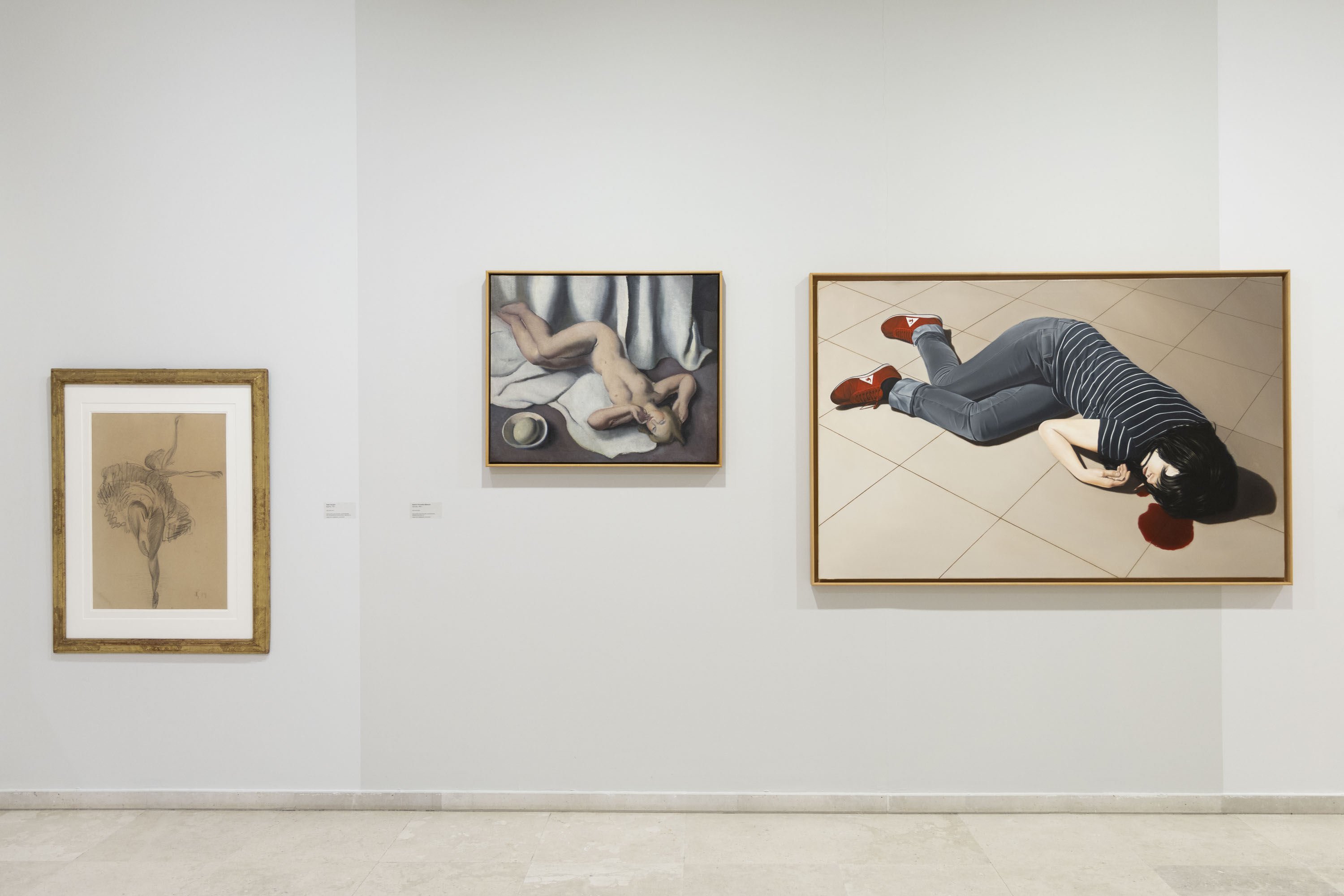
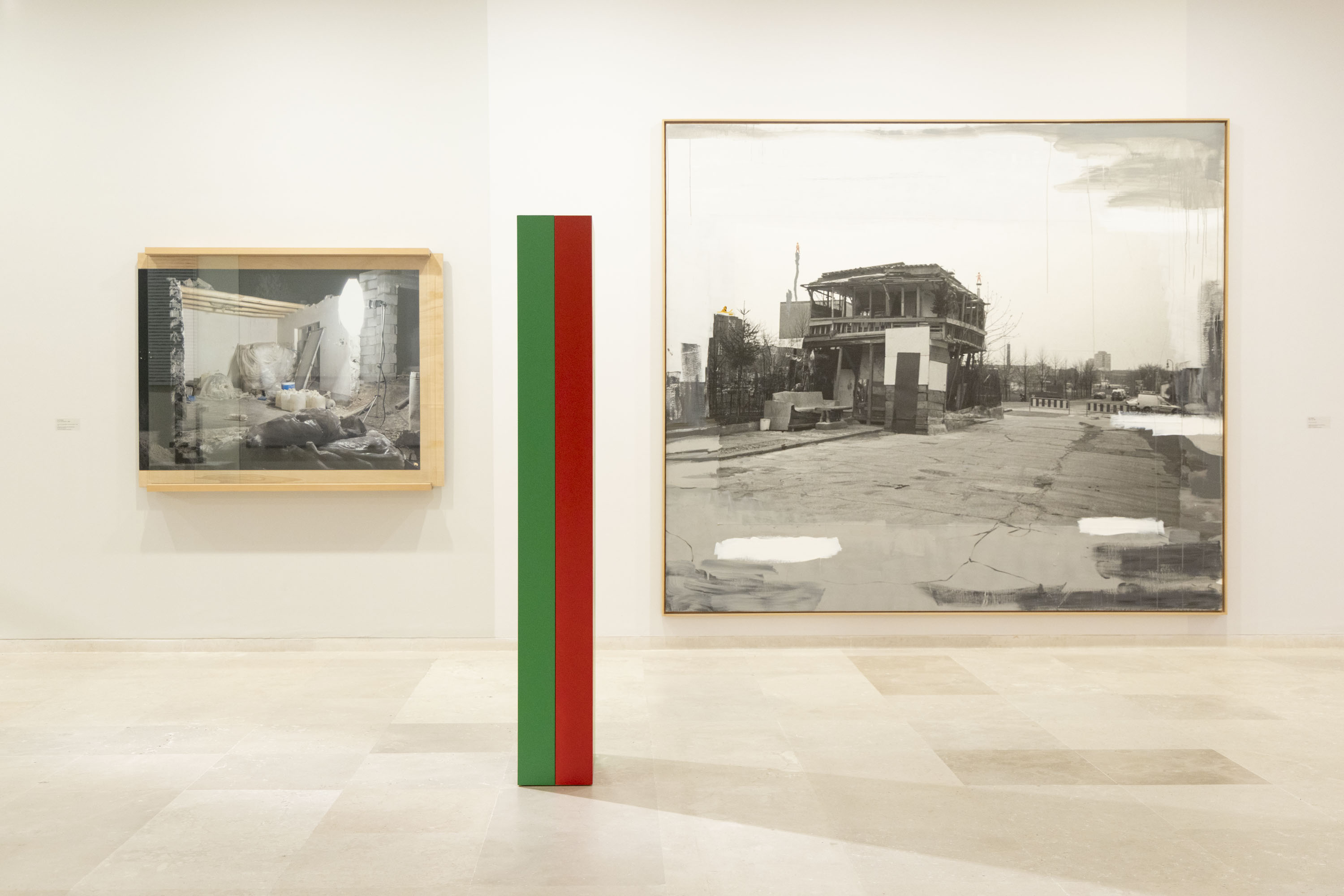
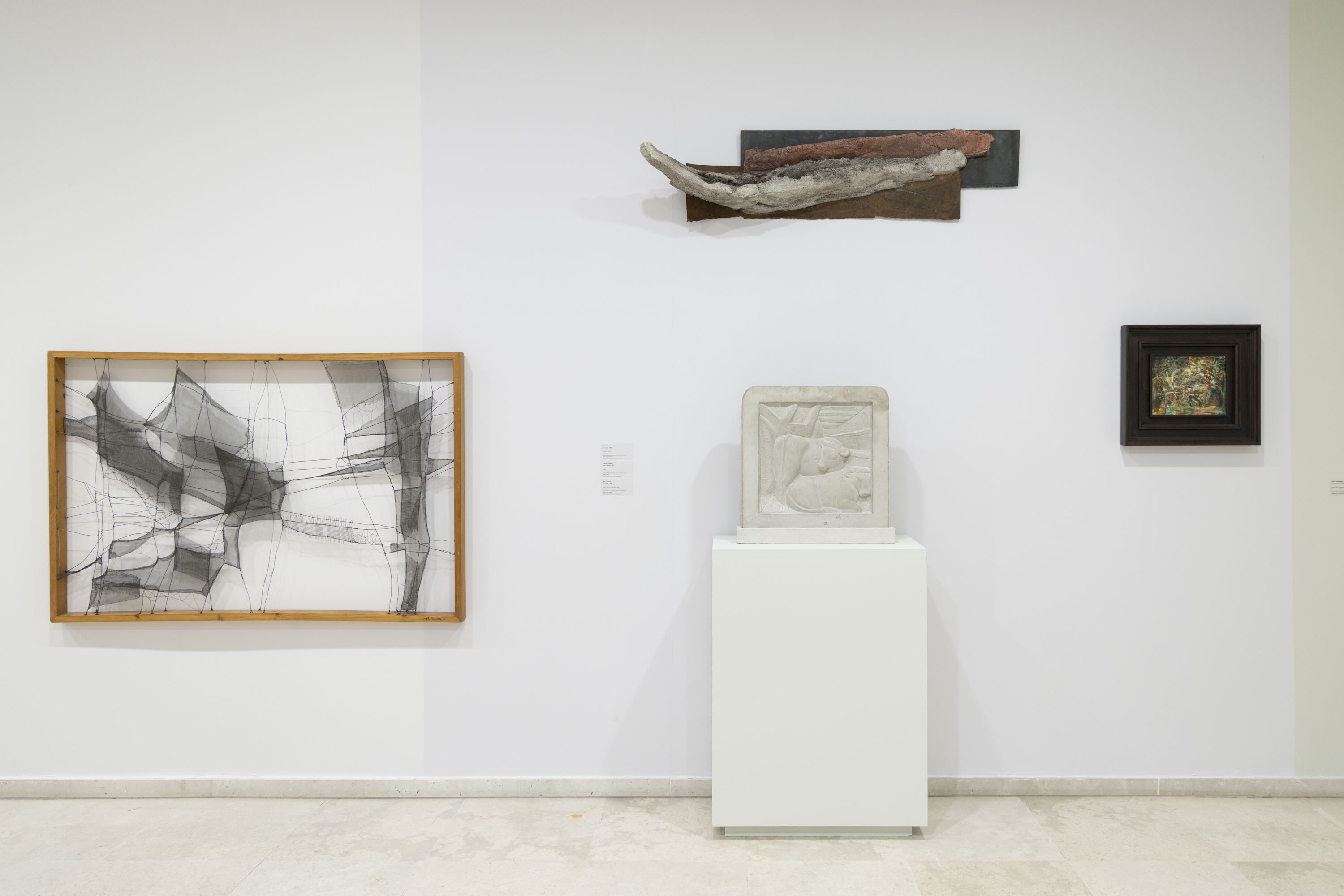
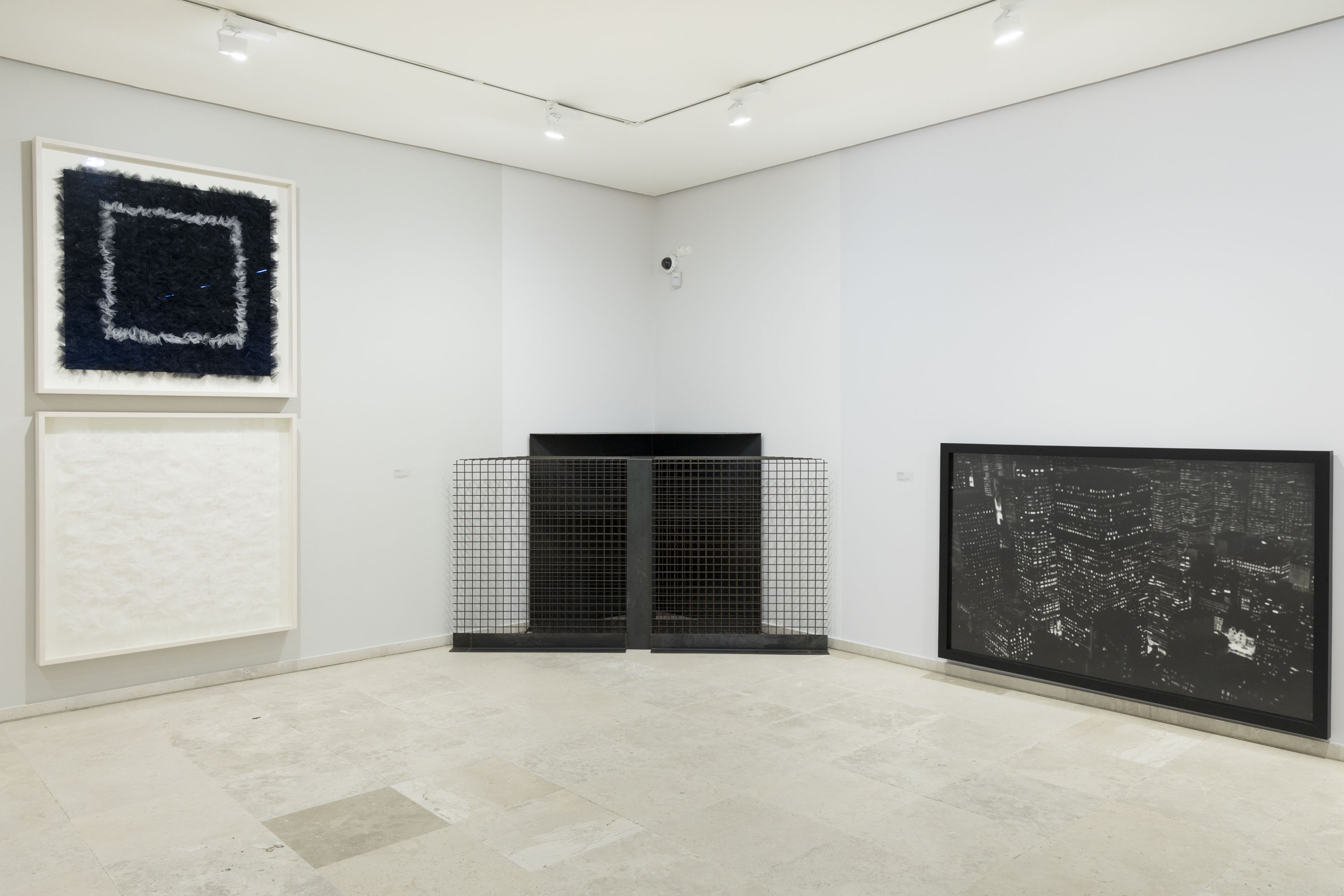
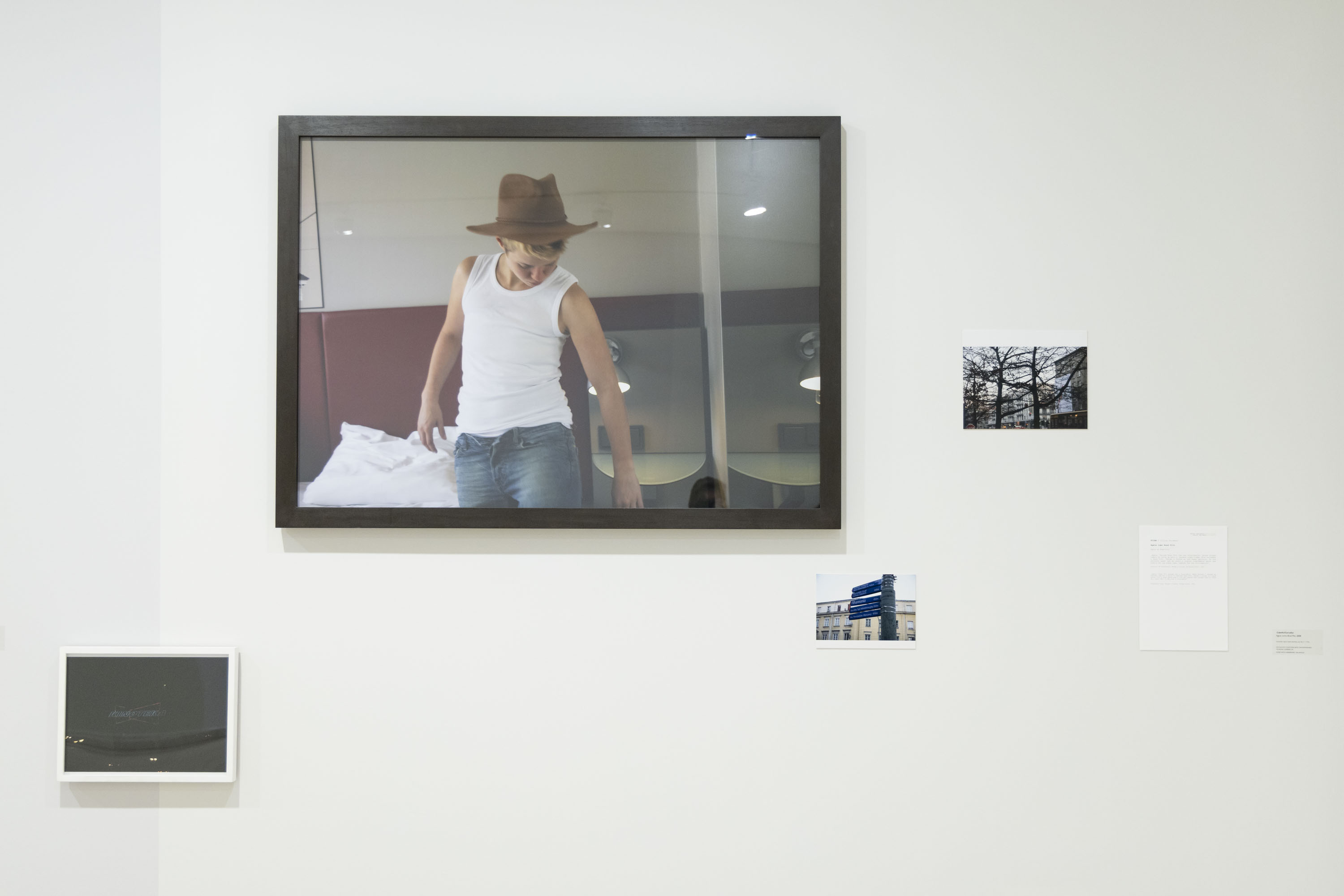
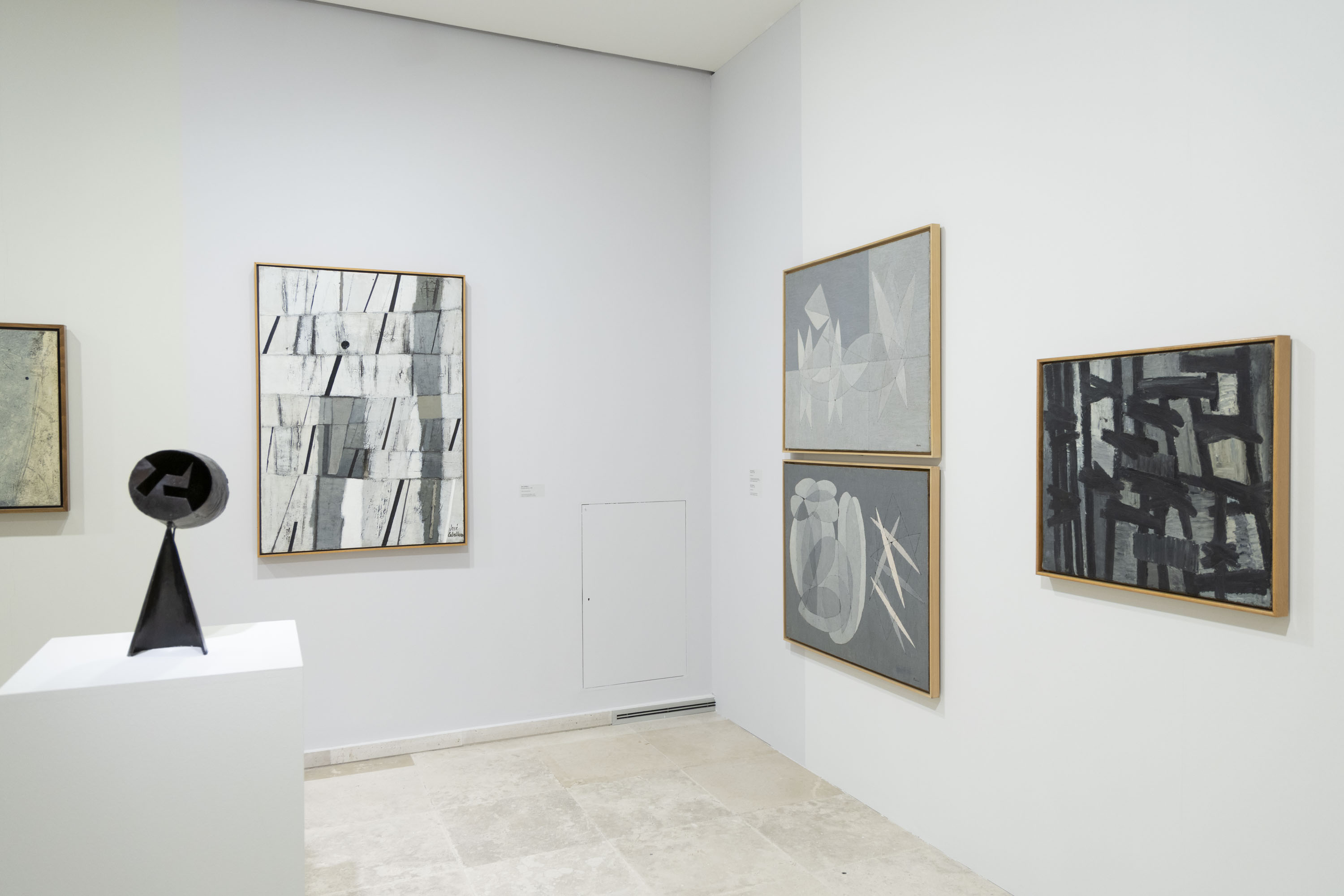
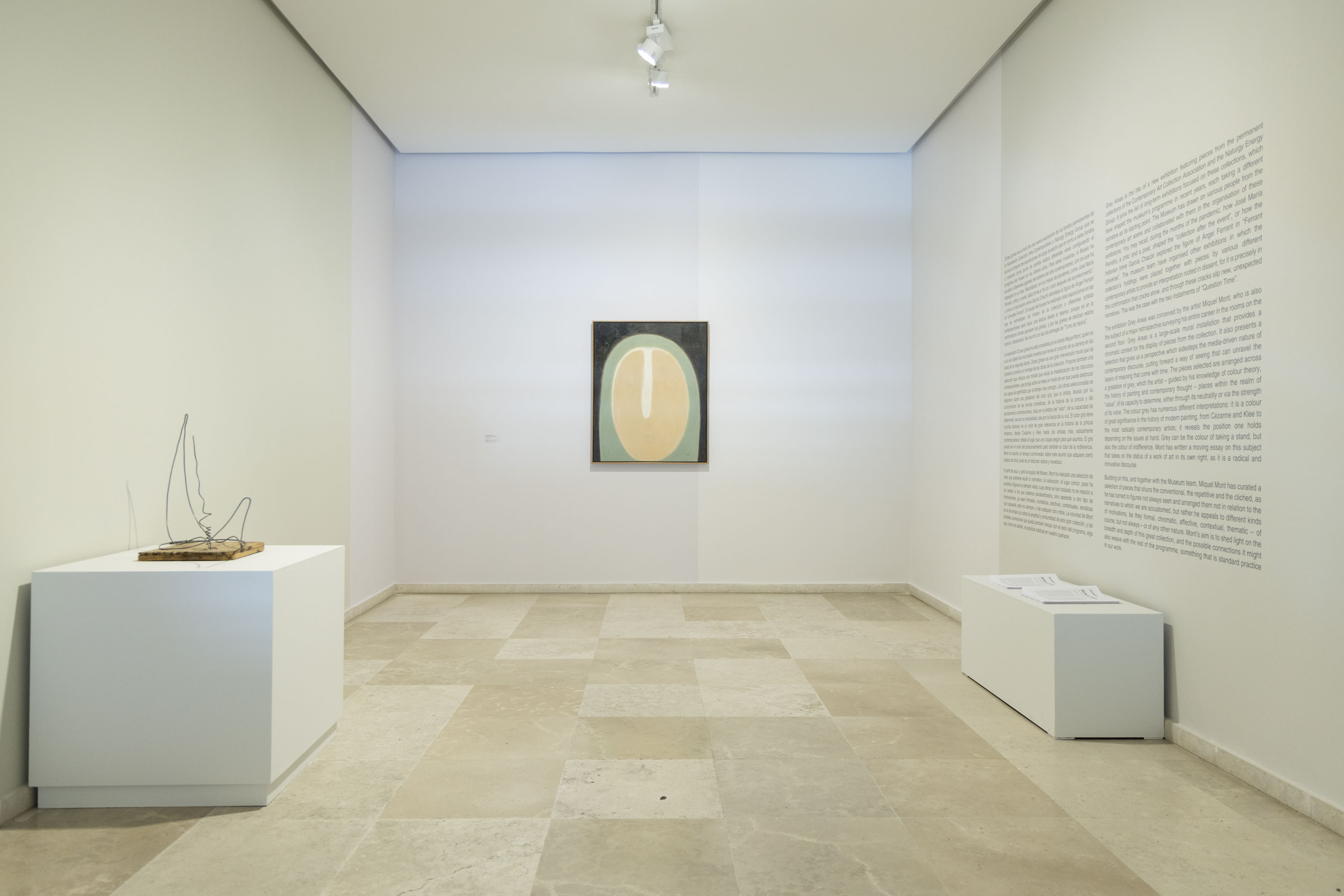
La exposición Zonas grises ha sido concebida por el artista Miquel Mont, quien es a su vez objeto de una amplia muestra que revisa el conjunto de su carrera en las salas de la segunda planta. Zonas grises es una gran intervención mural que da contexto cromático al montaje de las obras de la colección. Propone también una selección que ofrezca una mirada que eluda la mediatización de los discursos contemporáneos, que ponga sobre la mesa un modo de ver que pueda desbrozar las capas de significado que el tiempo trae consigo. Las obras seleccionadas se disponen sobre una gradación del color gris, que el artista, llevado por su conocimiento de las teorías cromáticas, de la historia de la pintura y del pensamiento contemporáneo, sitúa en el ámbito del “valor”, de su capacidad de determinar, sea por su neutralidad, sea por la fuerza de su voz. El color gris tiene muchas lecturas: es un color de gran relevancia en la historia de la pintura moderna, desde Cezànne y Klee hasta los artistas más radicalmente contemporáneos; delata el lugar que uno ocupa según para qué asuntos. El gris puede ser el color del posicionamiento pero también el color de la indiferencia. Mont ha escrito un esnayo conmovedor sobre este asunto que adquiere cierto estatus de obra, pues es un discurso radical y novedoso.
Más información (AQUÍ)
Grey Areas is the title of a new exhibition featuring pieces from the permanent collections of the Contemporary Art Collection Association and the Naturgy Energy Group. It joins the list of long-term exhibitions focused on these collections, which have shaped the museum’s programme in recent years, each taking a different narrative as its starting point. The Museum has drawn on various people from the contemporary art scene and collaborated with them in the organisation of these exhibitions. You may recall, during the months of the pandemic, how José María Parreño, a critic and a poet, shaped the “collection after the event”, or how the historian Irene García Chacón explored the figure of Ángel Ferrant in “Ferrant Universe”. The museum team have organised other exhibitions in which the collection’s holdings were placed together with pieces by various different contemporary artists to provide an interpretation rooted in dissent, for it is precisely in this confrontation that cracks show, and through these cracks slip new, unexpected narratives. This was the case with the two instalments of “Question Time”.
The exhibition Grey Areas was conceived by the artist Miquel Mont, who is also the subject of a major retrospective surveying his entire career in the rooms on the second floor. Grey Areas is a large-scale mural installation that provides a chromatic context for the display of pieces from the collection. It also presents a selection that gives us a perspective which sidesteps the media-driven nature of contemporary discourse, putting forward a way of seeing that can unravel the layers of meaning that come with time. The pieces selected are arranged across a gradation of grey, which the artist – guided by his knowledge of colour theory, the history of painting and contemporary thought – places within the realm of “value”, of its capacity to determine, either through its neutrality or via the strength of its voice. The colour grey has numerous different interpretations: it is a colour of great significance in the history of modern painting, from Cézanne and Klee to the most radically contemporary artists; it reveals the position one holds depending on the issues at hand. Grey can be the colour of taking a stand, but also the colour of indifference. Mont has written a moving essay on this subject that takes on the status of a work of art in its own right, as it is a radical and innovative discourse.
Building on this, and together with the Museum team, Miquel Mont has curated a selection of pieces that shuns the conventional, the repetitive and the clichéd, as he has turned to figures not always seen and arranged them not in relation to the narratives to which we are accustomed, but rather he appeals to different kinds of motivations, be they formal, chromatic, affective, contextual, thematic – of course, but not always – or of any other nature. Mont’s aim is to shed light on the breadth and depth of this great collection, and the possible connections it might also weave with the rest of the programme, something that is standard practice in our work.
More information (HERE)